When the power goes out, the first few minutes are usually manageable. Then reality hits: the house gets colder, the fridge starts warming, the internet drops, and you’re suddenly doing mental math—“How long will this last, and what do we need to protect?” For many homeowners, the bigger problem isn’t the outage itself. It’s the uncertainty.
“Backup power” can absolutely bring peace of mind, but only if it’s designed and installed for electrical safety. The internet is full of advice about portable generators, extension cords, and “quick hookups.” Unfortunately, some of those shortcuts create serious risk—especially the risk of backfeeding power into your home’s wiring and out onto utility lines.
The two common backup power paths
- Portable generators: These can be useful for short outages, but they usually involve manual setup, fuel handling, and limited capacity. Power is often delivered through extension cords or a transfer device that feeds selected circuits.
- Whole-home standby generators: These are permanently installed systems that start automatically during an outage and power either essential circuits or (in some designs) a larger portion of the home.
This blog focuses on whole-home standby generators because they’re the option most associated with “backup power that actually works” during the moments that matter.
The safety issue homeowners must understand: backfeeding
Backfeeding happens when generator power is sent into the home’s electrical system without properly isolating it from the utility supply. This can energize wiring in unintended ways, damage equipment, and—most importantly—create a life-safety hazard for utility workers repairing lines. Even well-intended DIY solutions can put people at risk. From a home protection standpoint, safe isolation is non-negotiable.
The component that makes it safe: the transfer switch
A whole-home generator system relies on an automatic transfer switch (ATS) or a properly installed transfer mechanism. The transfer switch disconnects your home from the utility before connecting generator power. That controlled “handoff” is what makes standby power code-compliant and safe. It also prevents overload situations by managing which circuits are powered, depending on the design.
Sizing and scope: “whole-home” doesn’t always mean “everything”
Homeowners often assume a whole-home generator will power every single load without limits. In reality, the best system is the one that matches your actual priorities. Consider what you truly need during an outage:
• Heating system or critical HVAC components
• Refrigeration and food safety
• Medical devices
• Well pump or sump pump
• Basic lighting and outlets
• Internet and a work-from-home setup
From there, sizing is about long-term reliability. An undersized generator can struggle, cycle excessively, or shut down under load. A poorly planned system can leave you surprised when certain items won’t run. And an oversized system isn’t automatically better if it’s not matched to your home’s electrical service and fuel availability.
Fuel considerations are part of the planning
Standby generators commonly run on natural gas or propane. Fuel type affects runtime, storage, and performance in extended outages. A professional evaluation takes these constraints into account so the solution is practical—not just impressive on paper.
How Safety Home Services helps
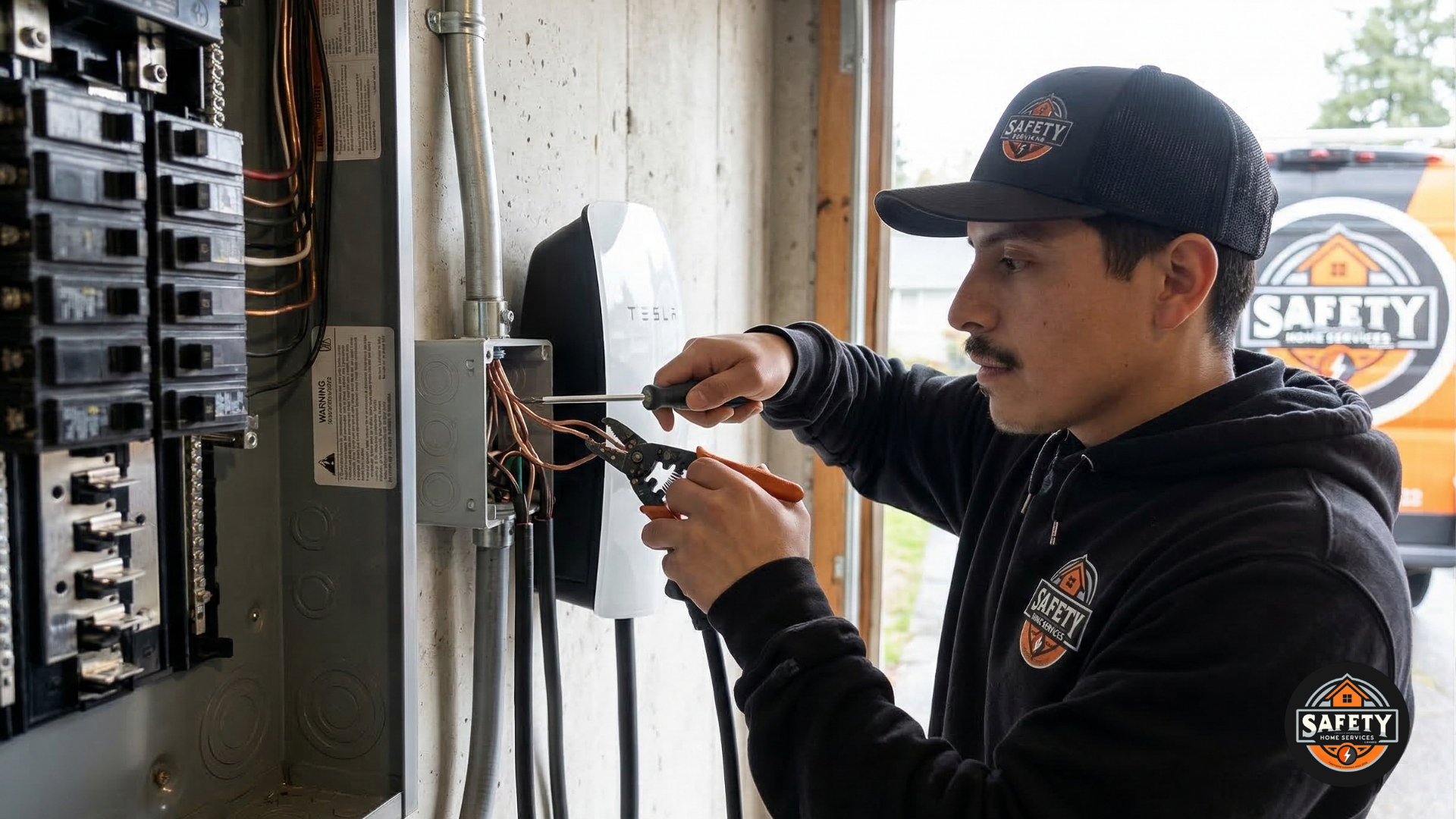
Safety Home Services approaches generator work like we approach all residential electrical projects: safety first, then reliability. We start with a thoughtful evaluation of your electrical service, panel configuration, and the loads you want to support. We help you decide on an “essentials-first” strategy or a broader-coverage plan, then design a code-compliant installation that integrates a proper transfer switch.
Professional installation matters because standby systems touch the most important parts of your electrical infrastructure. The work must be clean, correctly protected, correctly grounded, and designed for prevention—so the generator doesn’t become a new point of failure or risk.
We also take time to explain operation and expectations. Generators require periodic maintenance and testing to remain reliable. Knowing what “normal” sounds and looks like, and having a plan for upkeep, is part of true peace of mind.
If you’re unsure about your home’s electrical safety—or you’re wondering whether a generator is the right step for your household—the best first step is simply to talk with a professional who can help you understand your options. A calm, informed plan today can prevent stress and uncertainty during the next outage.