A hot tub is supposed to be the calm corner of your home—until the breaker trips mid-soak, the lights in the house dim when the heater kicks on, or you find yourself wondering, “Is this actually safe?” Because hot tubs sit outdoors and operate near water, electrical choices that would be merely “inconvenient” indoors can become serious home protection concerns outside.
Here’s the key reality: a hot tub is a high-demand appliance. Many models require a 240-volt supply and draw significant current for the heater, pumps, and controls. That demand often changes throughout a cycle. When the heater and pumps run together, the electrical load can spike—meaning the wiring and protection devices must be designed for those peak conditions, not just average use.
What does “dedicated circuit” mean?
A dedicated circuit is a circuit that exists for one job only: safely powering the hot tub. Nothing else—no patio outlets, no garage lights, no freezer, no landscape lighting. This matters because every circuit in your home has a maximum safe capacity based on breaker size, wire size, and installation method. When you add a hot tub onto an existing circuit (or “borrow” power from a nearby outlet), you are stacking a major load onto wiring that was never intended to handle it.
Why skipping a dedicated circuit is risky
Homeowners commonly run into three problems when a hot tub is not on a dedicated, code-compliant circuit:
- Nuisance trips that are actually warnings
Repeated breaker trips aren’t just annoying—they’re your electrical system trying to prevent overheating. If a breaker trips when the hot tub heater starts, it’s a signal that the circuit is overloaded, undersized, or incorrectly protected. Resetting and carrying on can mask the underlying risk.
- Overheating hidden behind walls or conduit
A circuit that is too small for the load can run hot. Heat is one of the primary drivers of electrical failure. Insulation can break down over time, and loose connections can create even more heat at the termination points. Outdoor installations add complexity: temperature swings, moisture, and exposure all increase the need for professional installation and the right rated materials.
- Increased shock risk in a wet environment
Water lowers the body’s resistance and increases the danger of electric shock. That is why hot tubs require specific safety protections and clearances, including ground-fault protection (often via a GFCI breaker or device) and correct bonding/grounding practices. Improper wiring, “creative” adapters, or DIY connections can create dangerous fault paths that aren’t obvious until someone is in the water.
A few common misunderstandings
• “It works, so it must be fine.”
Electrical systems can appear to work while still being unsafe. The absence of immediate failure isn’t proof of code compliance.
• “I’ll just put it on a bigger breaker.”
Installing a larger breaker without matching wire sizing is one of the most dangerous misconceptions. Breakers are there to protect the wiring. Oversizing the breaker can allow wiring to overheat without tripping.
• “I can run it off an existing outlet.”
Hot tubs are not designed for extension cords or improvised connections. These workarounds are unreliable and can create fire and shock hazards.
How Safety Home Services helps
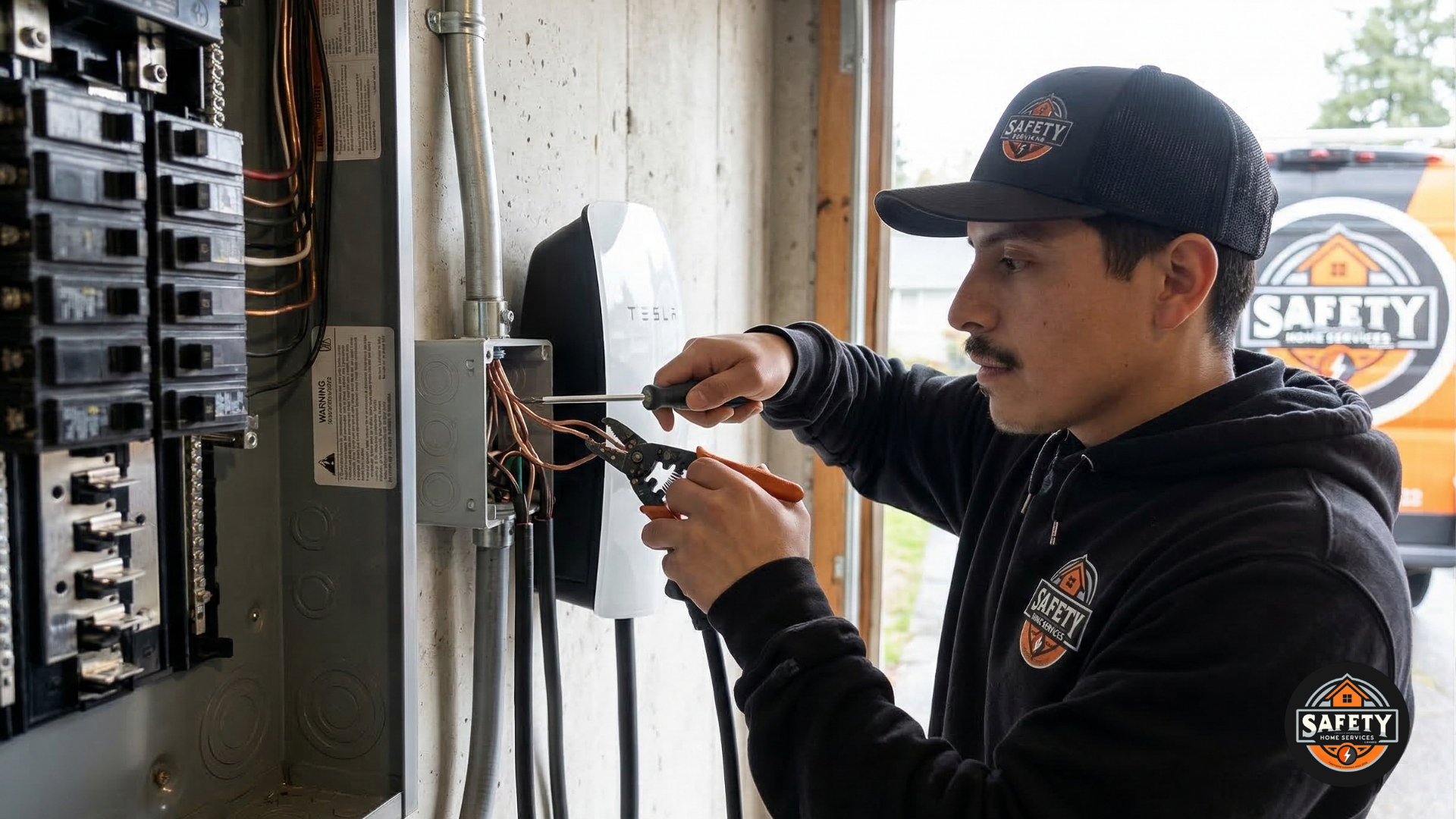
Our approach is built around prevention, electrical safety, and long-term reliability. We start by evaluating your main electrical panel capacity and available space for a new breaker. Then we design and install a dedicated circuit sized for your specific hot tub requirements, including the correct conductor size, correct breaker type, and outdoor-rated components. We verify grounding and bonding so fault conditions are handled properly and your setup is code-compliant.
Just as important, we explain what we’re doing and why. Homeowners deserve clarity: what your hot tub needs electrically, what protections are in place, and what warning signs to watch for in the future.
A dedicated circuit isn’t an “extra.” It’s the foundation for safe outdoor power—so your hot tub stays what it should be: relaxation, not a lingering question mark.
If you’re unsure about your home’s electrical safety, the best first step is simply to talk with a professional who can help you understand your options. If you already have a hot tub and you’re seeing tripped breakers, dimming lights, or anything that feels inconsistent, a professional assessment can help you protect your home and restore peace of mind.