If you’ve ever rearranged furniture because “that’s the only outlet,” or you’ve got a permanent tangle of chargers and power strips behind the TV, you’re not alone. Many homes—especially older ones—were built for a world without smart devices, home offices, streaming boxes, and countertop appliances in every corner. The result is a daily annoyance that can quietly become a safety concern: overloaded outlets and too much reliance on temporary solutions.
The big question homeowners ask is simple: “Is this just messy… or is it actually dangerous?” The answer is: it depends, but the risk rises when power strips and extension cords become permanent infrastructure.
What’s happening behind the walls
Every circuit in your home is designed to carry a certain amount of current safely. In older homes, it’s common to find:
• Fewer circuits serving larger areas
• Rooms where multiple outlets share a single circuit (“daisy-chained”)
• Outlets that have aged and no longer grip plugs tightly
• Electrical boxes that are crowded, with loose or worn connections
When you plug many devices into one area—space heaters, hair tools, coffee makers, air fryers, gaming PCs—those loads may be sharing one circuit even if they’re spread across several outlets. Power strips don’t change the capacity of the circuit. They simply give you more places to plug into the same limited supply.
Why it matters: heat, arcing, and hidden failure
Electrical risk often shows up as heat. Loose connections inside an outlet or junction box can create resistance, and resistance creates heat. In some cases, heat leads to arcing—tiny electrical jumps that can damage wiring, carbonize insulation, and raise fire risk. You might not see it happening, especially if the problem is inside the wall.
Common warning signs homeowners shouldn’t ignore
• Outlets or faceplates that feel warm
• Flickering lights when appliances start
• Buzzing sounds near outlets or switches
• Breakers that trip repeatedly
• Burnt smell, discoloration, or scorch marks
• Plugs that fall out easily or feel loose
If you notice any of these, it’s worth treating as an electrical safety issue, not a convenience problem.
What homeowners commonly misunderstand
• “If I add another power strip, I’m fine.” More strips can increase clutter and increase the chance of overloading a circuit.
• “A breaker will always trip before anything bad happens.” Breakers protect against certain overloads, but loose connections can overheat without immediately tripping.
• “Replacing an outlet is always an easy DIY.” Some swaps are straightforward, but older wiring, mixed wiring methods, or grounding issues can turn a “simple” job into a risky one if done incorrectly.
Modernizing electrical access—what it really means
Modernizing isn’t just adding more outlets. It’s matching your home’s electrical system to how you live today, with a focus on prevention and long-term reliability. Depending on the home, that can include:
• Adding outlets in high-use areas (TV walls, home offices, kitchens, bedrooms)
• Installing dedicated circuits for high-demand appliances or equipment
• Replacing worn or outdated receptacles with modern, code-compliant devices
• Correcting wiring issues discovered during evaluation (loose connections, improper grounding, overcrowded boxes)
How Safety Home Services helps
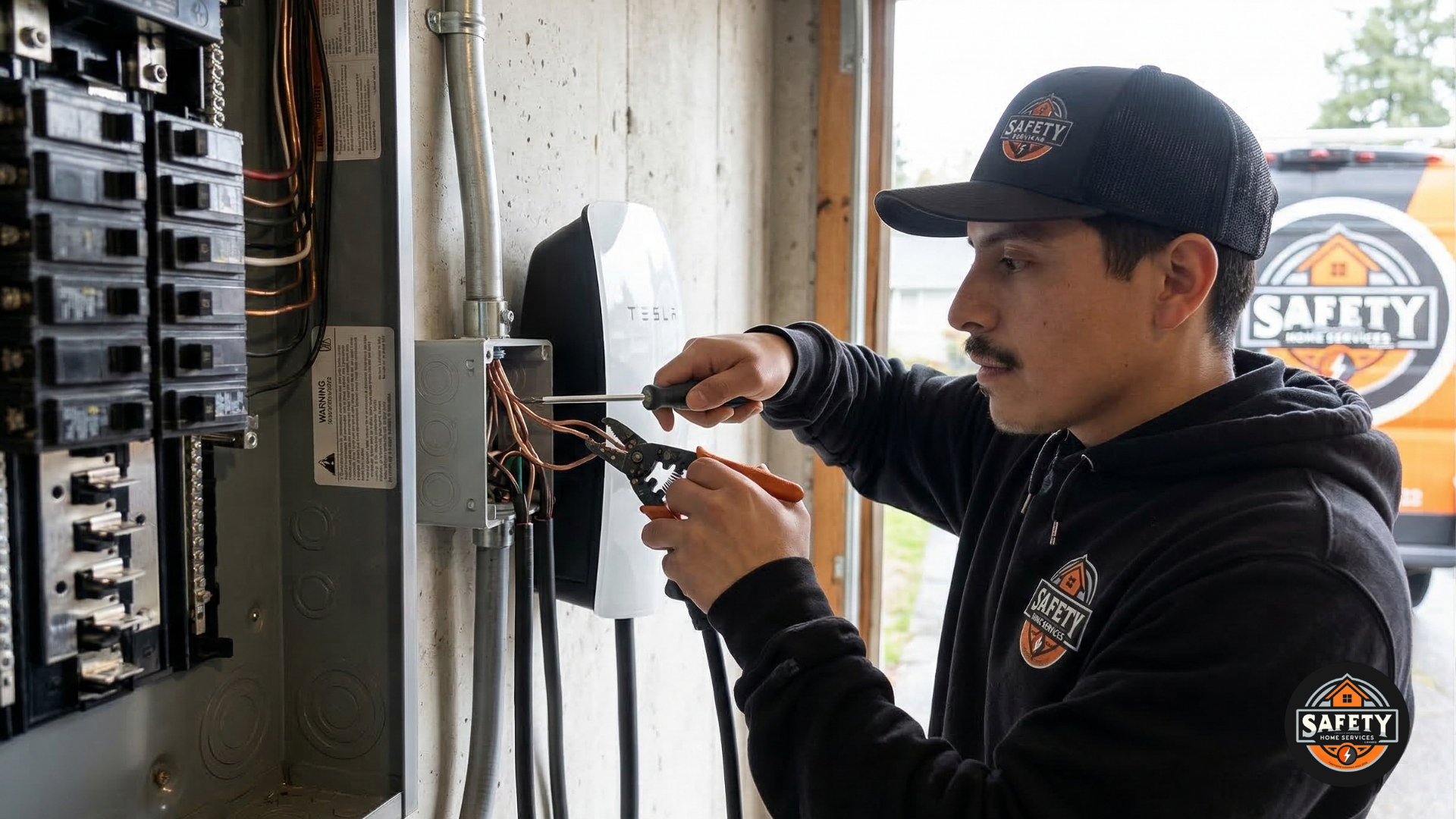
Safety Home Services approaches outlet and access upgrades as a home protection project, not a cosmetic one. We start by understanding where you’re experiencing pain: constantly tripping breakers, not enough outlets, messy power strips, or outlets that feel unreliable. Then we evaluate the circuits serving those areas and look for signs of overload or aging components.
From there, we recommend code-compliant solutions that improve safety and everyday function. That might mean adding properly placed outlets, updating receptacles, or installing new circuits so your devices aren’t fighting for limited capacity. Everything is installed professionally with a focus on electrical safety, prevention, and the kind of long-term reliability that lets you stop thinking about your electrical system.
The goal isn’t to overcomplicate your home. It’s to make your power access safer, cleaner, and better aligned with modern life—so you gain peace of mind instead of cords and guesswork.
If you’re unsure about your home’s electrical safety, the best first step is simply to talk with a professional who can help you understand your options. A thoughtful assessment can reveal whether you need a small upgrade or a more comprehensive plan—either way, you’ll move forward with clarity and home protection in mind.