The Dryer’s Dirty Little Secret (It’s Not Lint)
It’s not the lint trap. It’s not the vent hose. It’s your overloaded circuit, and most Lake Oswego homeowners don’t even know it’s there—until the lights flicker, the breaker trips, or the dryer just stops mid-cycle.
Dryers pull more amps than almost any other appliance in your home. If your panel wasn’t built for it—or your wiring’s seen better decades—you could be sitting on a silent hazard.
Here’s the real risk: Repeated overloads wear down your breaker’s trip mechanism. Eventually, the breaker stops tripping altogether… and that’s when fires happen.
Why Breaker Trips Aren’t Just Inconvenient—They’re Warnings
That “click” you hear when your dryer shuts off isn’t just annoying. It’s your home’s electrical system saying, “Help me out here!”
A circuit breaker is designed to interrupt unsafe currents. But if it’s tripping repeatedly—or worse, if it never trips when your dryer overloads it—something’s off.
Most homeowners chalk it up to “quirks.” But in Lake Oswego’s older homes (especially pre-1990 builds), undersized circuits and aging panels are a common issue.
Every unexpected breaker trip deserves attention. Not panic. Just professional inspection.
How Modern Appliances Overwhelm Older Home Wiring
Here’s a surprising stat: today’s dryers draw up to 30% more current than units from the early 2000s.
Now layer in everything else plugged into your system—smart thermostats, EV chargers, instant hot water dispensers—and you’ve got a recipe for panel overload, especially if your home still runs a 100-amp service.
Dryers need dedicated 240V circuits. But many Lake Oswego homes repurpose old circuits, add adapters, or “piggyback” multiple appliances. That’s where safety goes sideways.
Signs Your Dryer’s Circuit Is in Trouble
Watch for these clues:
- Breaker trips mid-cycle—or doesn’t trip, but dryer shuts off
- Dryer runs hot to the touch or takes too long to dry
- Flickering bathroom or kitchen lights while dryer’s on
- Slight burning smell near your panel or laundry room
- You can’t run the dryer and another appliance (like a microwave) without tripping something
If you notice any of these, it’s time for circuit breaker troubleshooting in Lake Oswego—before a minor annoyance becomes a major event.
Lake Oswego Code & Compliance Tips You Need to Know
In Oregon, dryer circuits must meet National Electrical Code (NEC) 210.19(A) requirements—meaning a dedicated 30-amp branch circuit, properly grounded, and GFCI-protected in certain locations.
Many Lake Oswego homes were built before these rules existed. That’s not illegal—but it can become non-compliant if you upgrade your dryer or renovate.
What does that mean for you? If you’re:
- Selling your home
- Installing a new dryer
- Adding an EV charger or mini-split…
…you’ll likely need a panel upgrade or circuit rewire to meet today’s standards—and pass inspection.
What a Circuit Breaker Troubleshooting Visit Looks Like
Think it’s a messy ordeal? Think again.
When Safety Home Services arrives, here’s what we do:
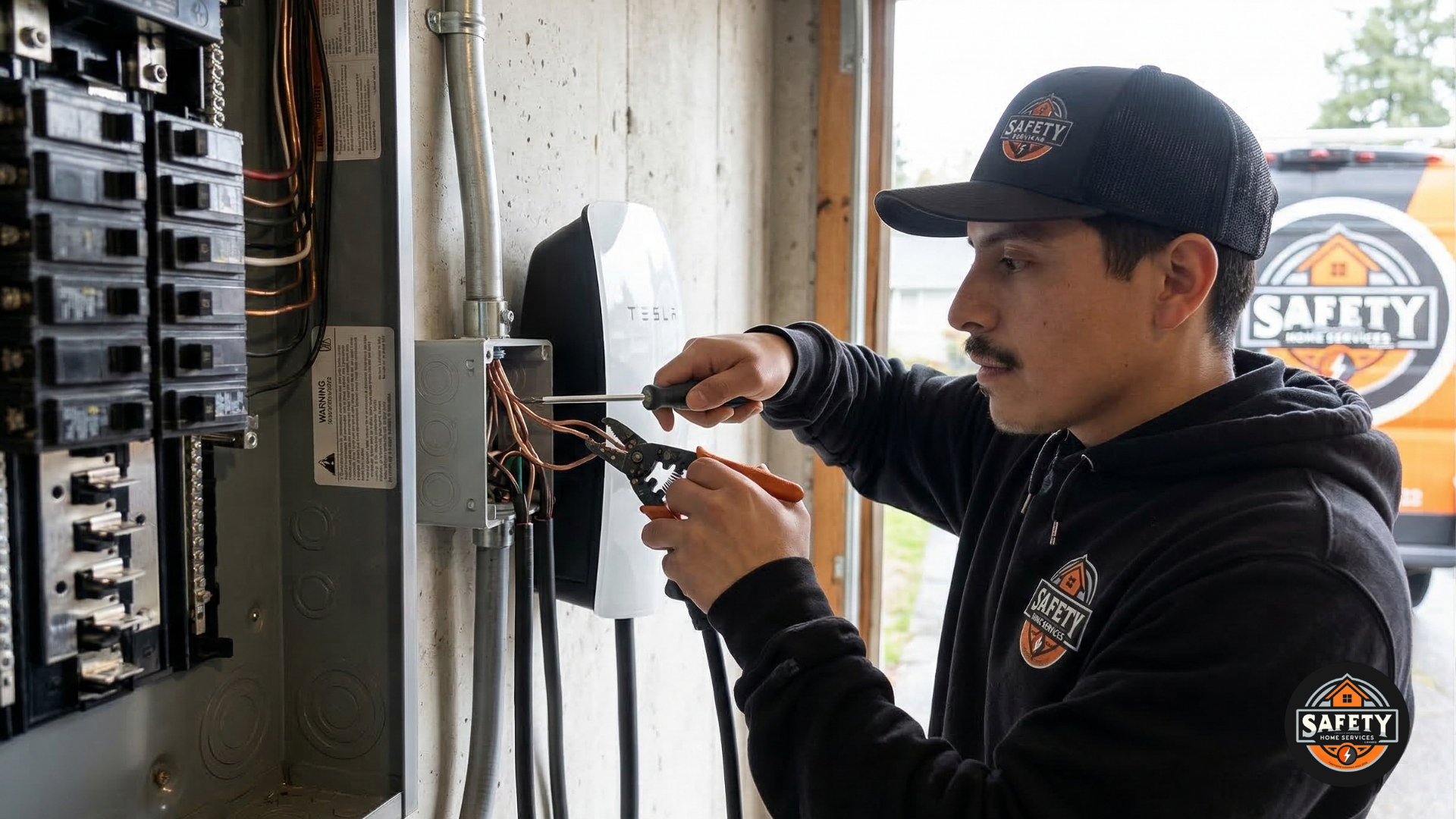
- Inspect your panel and dryer circuit for wear, corrosion, or undersizing
- Test the breaker with a load simulator
- Check for double-lugged connections or shared neutrals (code no-no’s)
- Use a thermal camera to identify overheating conductors
- Provide a clear, fixed-price quote for any repair or upgrade—on the spot
You’ll get plain-English answers, courteous pros, and shoe covers on every visit.
Soft Fixes vs. Safe Fixes—What’s Worth DIYing
Some steps you can take today:
- Clean your lint trap and exterior vent regularly
- Unplug your dryer when not in use (minimizes phantom draw)
- Avoid running heavy appliances at the same time
But here’s what NOT to DIY:
- Replacing breakers without proper load calculation
- Running new wire through walls or ceilings
- Ignoring a warm outlet or “buzzing” breaker
These issues signal deeper faults. And they don’t just fix themselves.
Final Thought: Safer Homes Start Behind the Dryer
Here’s the truth most Lake Oswego homeowners miss:
Your dryer’s not the enemy. But the circuit behind it might be.
That’s why circuit breaker troubleshooting in Lake Oswego isn’t just about performance—it’s about protecting your home’s most vulnerable zone.
Your laundry room deserves as much safety attention as your kitchen or bathroom. Let’s make sure it’s not the weak link in your home’s power chain.
Ready to stop guessing and start securing? Call Safety Home Services at 971-345-5650 for a circuit breaker check tailored to Lake Oswego homes. We’ll explain what’s happening, what it costs, and how soon we can fix it—usually within 48 hours.